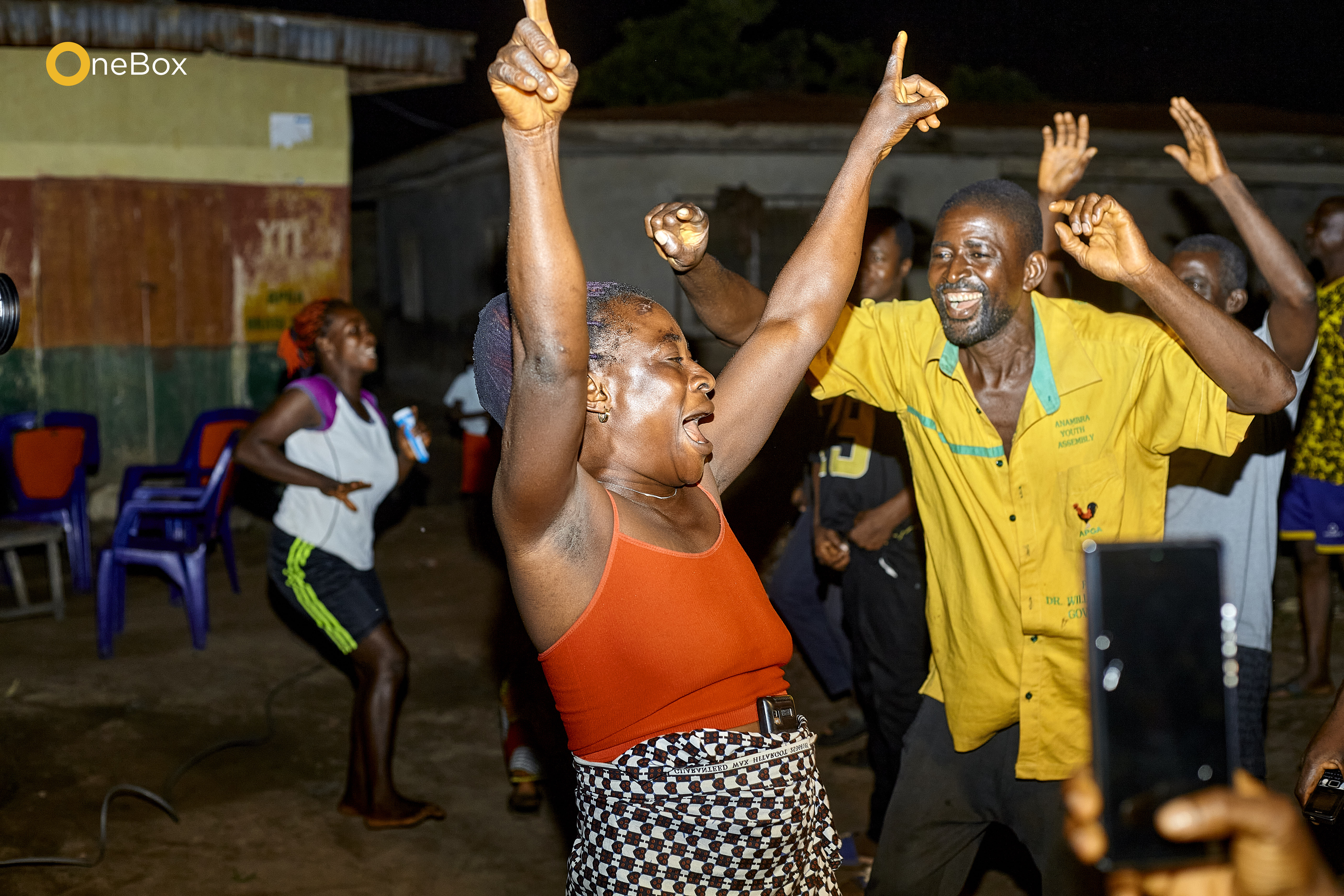
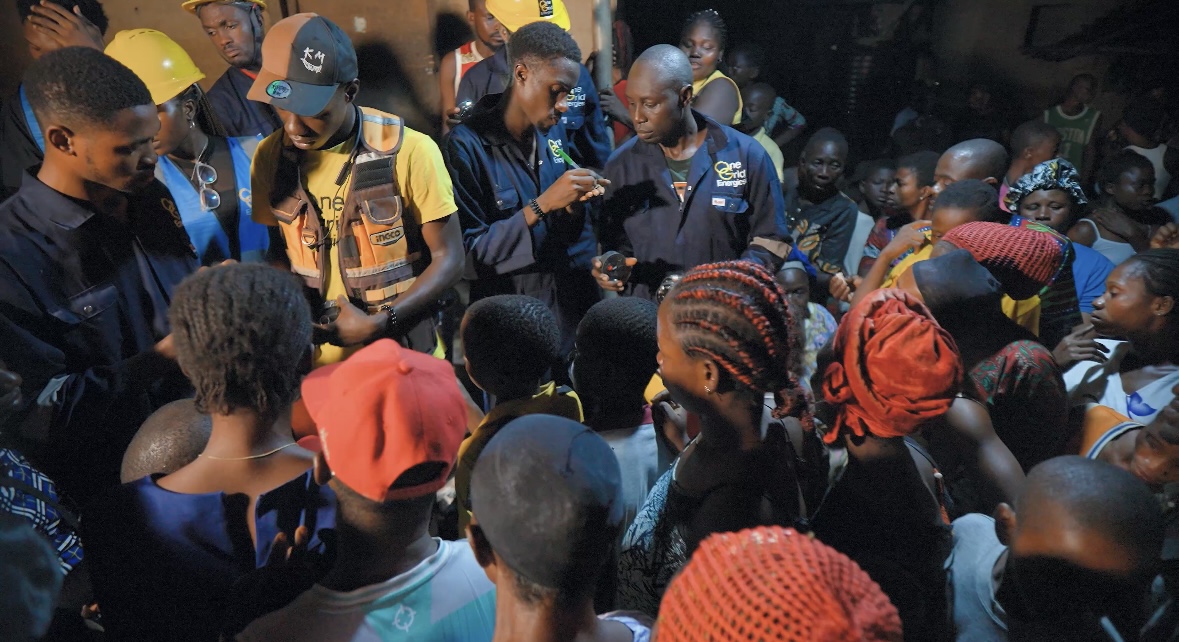
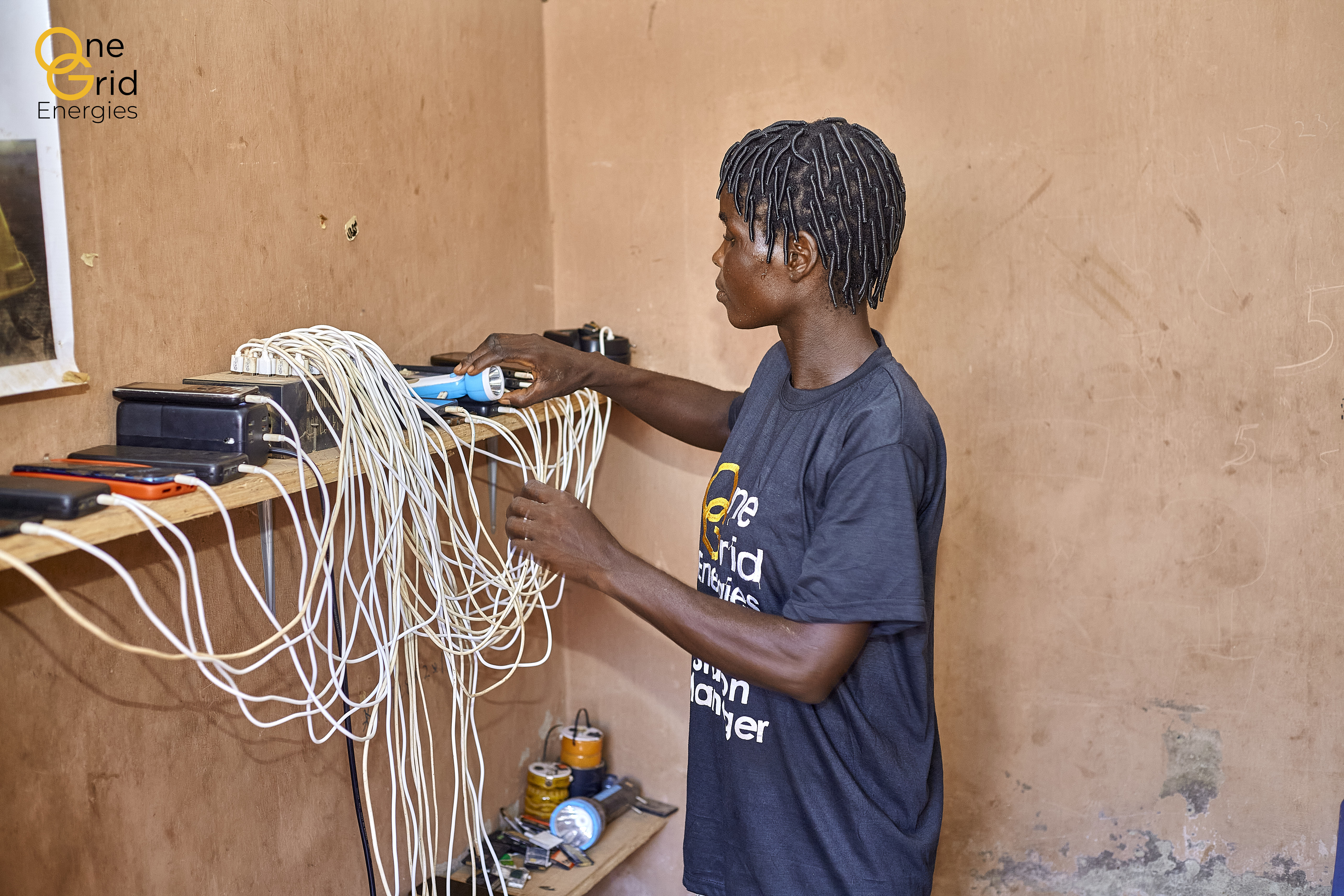
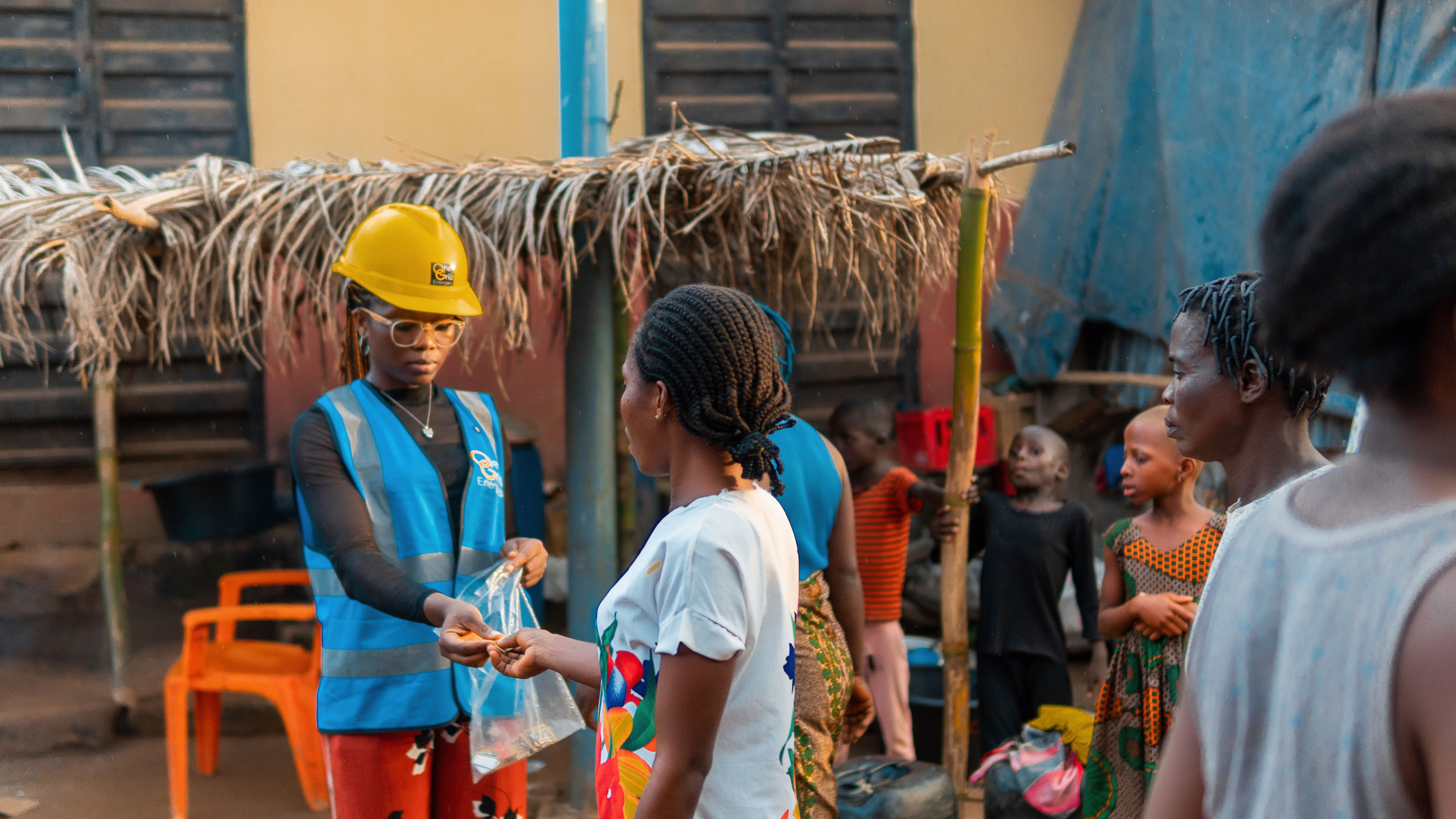
This muted video section plays in a continuous loop before you continue down the page to the rest of the OneGrid story.
Explore the page
Transforming waste into light, empowering communities,
and creating a future where no family is left in darkness.
OneGrid Energies is a Nigerian clean energy company transforming waste plastic bottles and discarded lithium-ion batteries into solar-powered lanterns while providing renewable energy access, solar installations, technical training, and community empowerment across underserved communities.From community charging stations to healthcare electrification projects, we develop sustainable solutions for communities lacking reliable electricity.
Our Vision
By creating a world where no community is left in darkness.
Our Mission
Through sustainable energy, recycling innovation, and human empowerment.
Growing up in Nigeria, smoke filled my small room every evening, burning my eyes and lungs, but poverty gave me no other option. I still remember trying to study under that weak yellow flame, praying the kerosene would not finish before I finished my homework.
One night while studying with a candle, I mistakenly slept off and fire destroyed my property. Earlier in my life, I had also narrowly survived a devastating flood caused by plastic waste blocking drainage systems in my community. But the experience that truly broke me happened years later.
I watched a local midwife trying to deliver a baby using only candlelight because there was no electricity. The room was dark, hot, and filled with fear. Every second felt dangerous. I could not stop thinking about how something as basic as light could decide whether a mother or child lived or died.
What if waste itself could become hope?
That question gave birth to OneGrid Energies. Today, our work impacts thousands of people every month. Children can now study safely at night. Women no longer inhale kerosene smoke while caring for their families. Rural healthcare centers have better lighting for childbirth and emergencies.
There were nights I slept with tears in my eyes, overwhelmed by the scale of the problems around me. Yet every morning, I woke up with the same determination: to reduce darkness in every form — physical darkness, environmental darkness, and even the hopelessness many young people silently carry inside them.
I believe innovation is not just about technology. It is about humanity.
Even if we cannot solve every problem in the world, while we are here, we can reduce darkness. That is why I continue to build.
Valentine Nnamani
CEO, OneGrid Energies
From waste to watts — every initiative we run creates a ripple of impact far beyond its immediate reach.
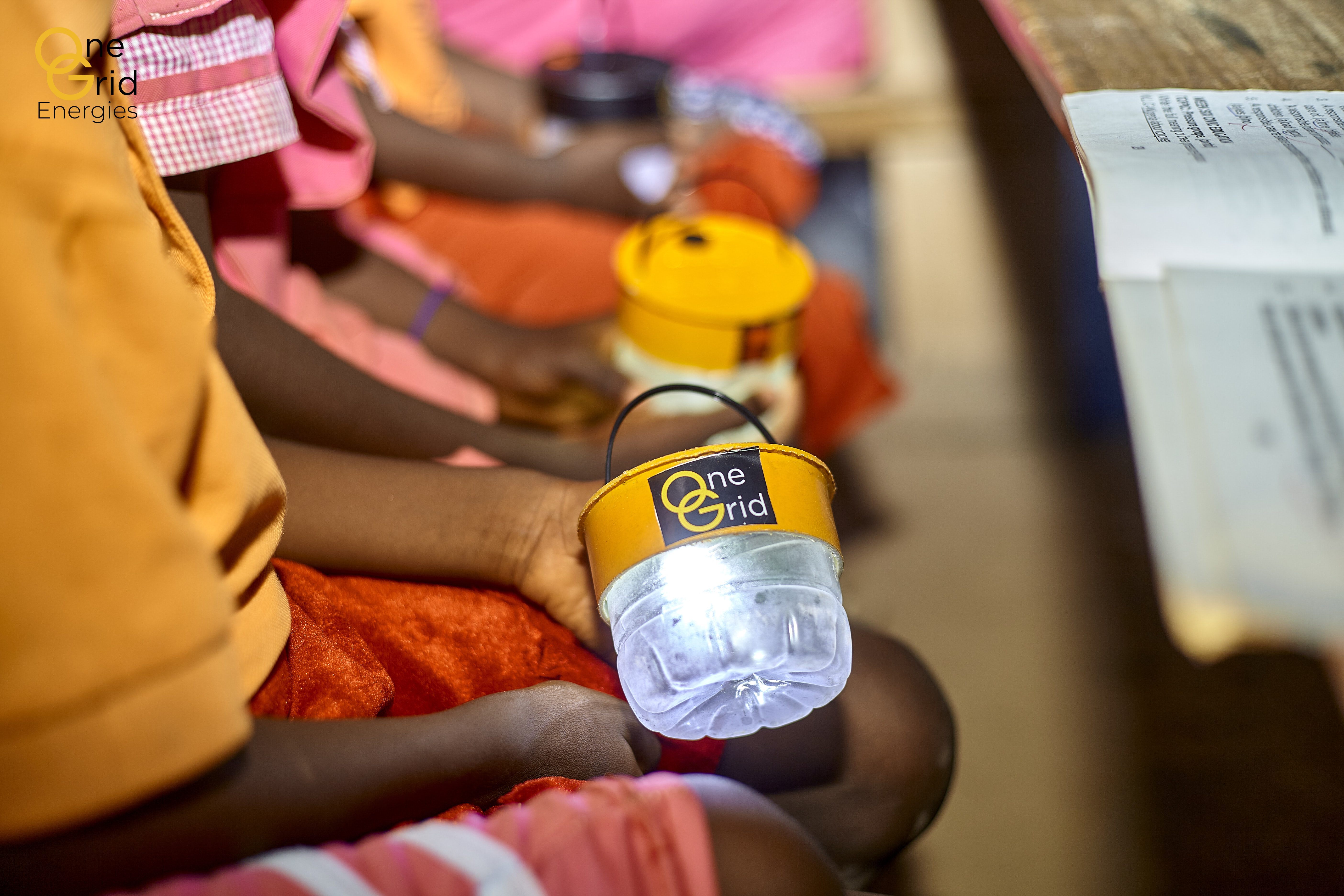
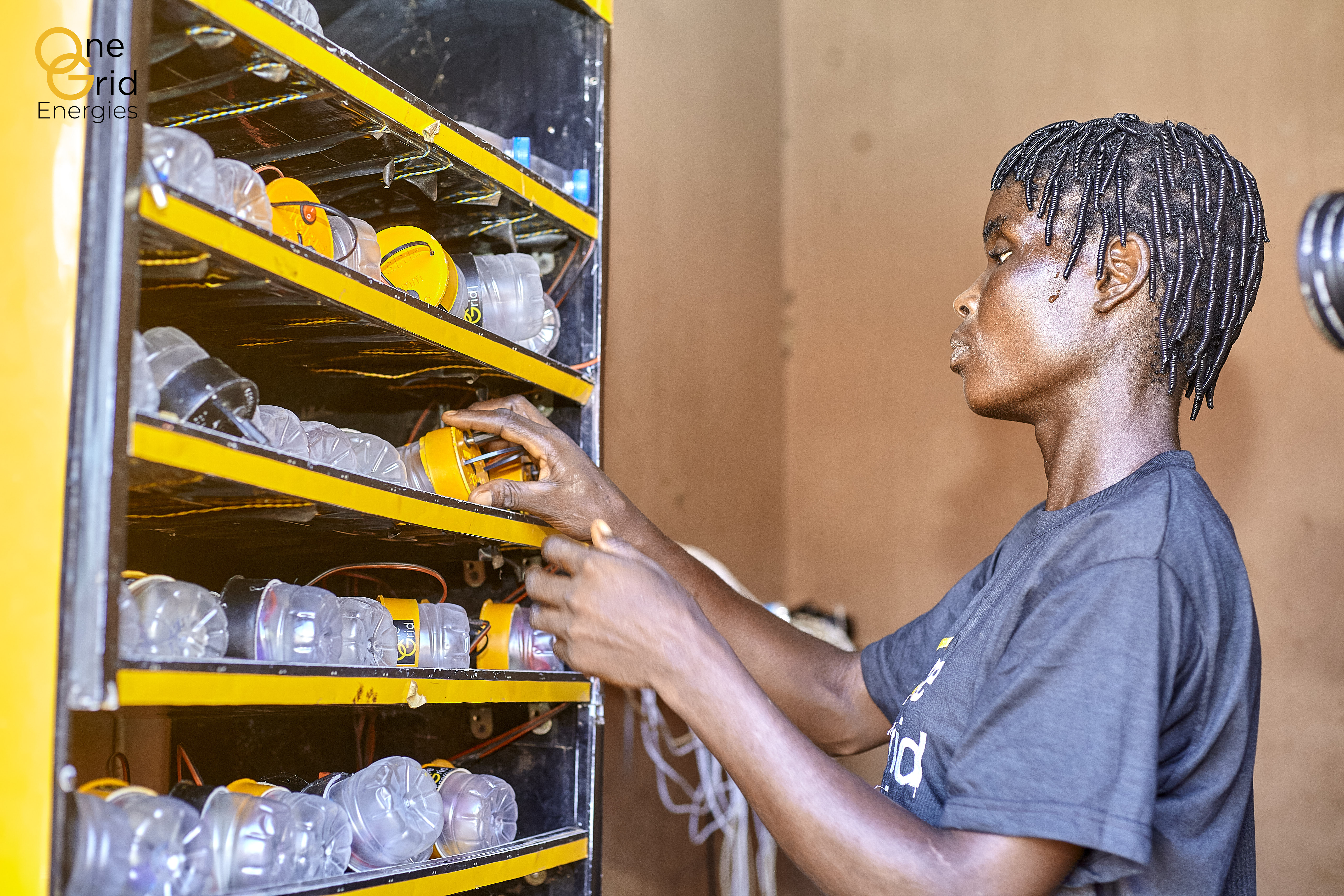
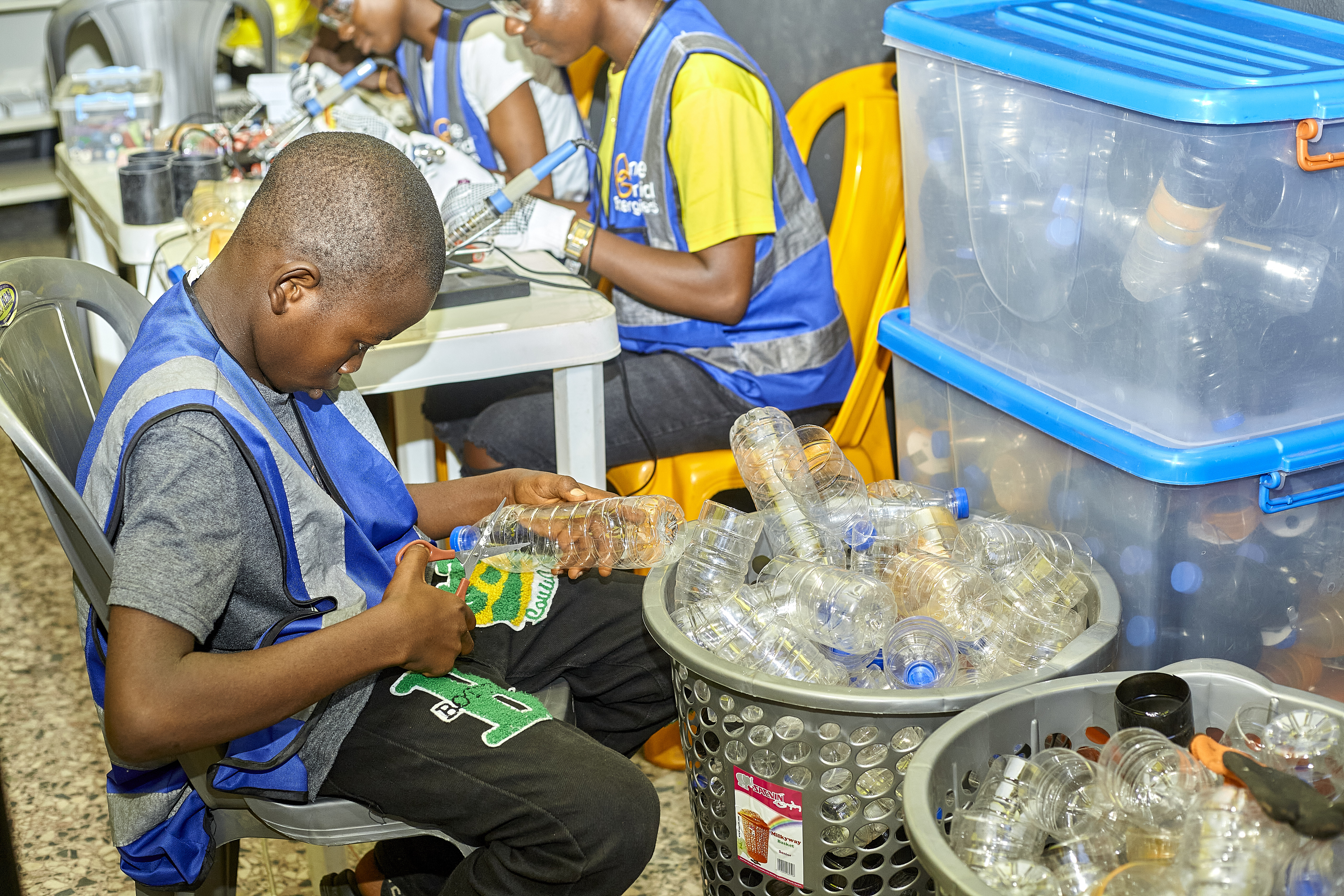
We collect waste plastic bottles and discarded lithium-ion laptop batteries, recycling them into affordable solar-powered lanterns that bring safe, clean light to homes, schools, and healthcare centres.
Learn More About OnePlasticSolar lanterns delivered to rural maternity clinics so that midwives can safely deliver babies at night. Over 7,000 improved healthcare outcomes and counting.
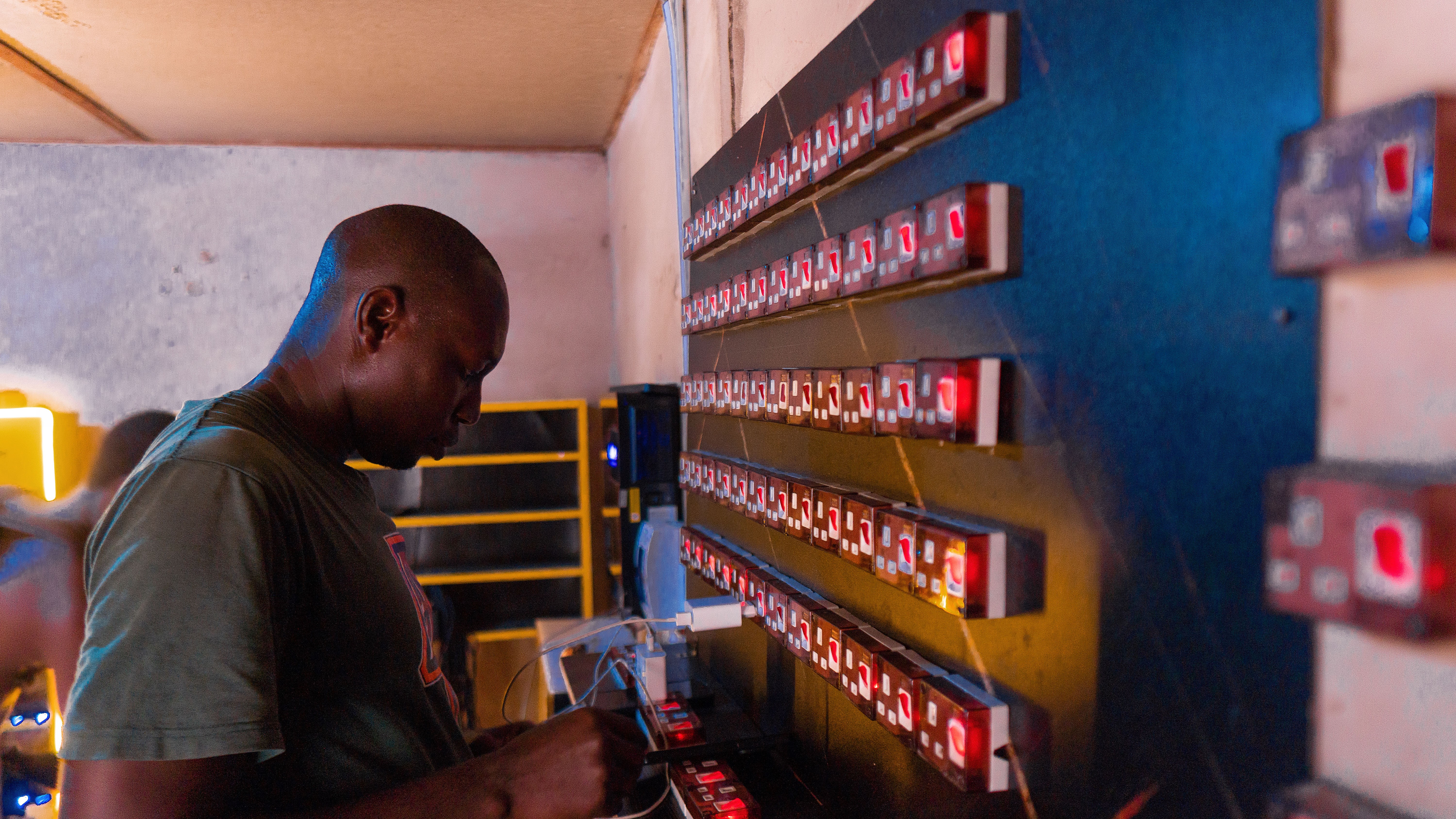
Learn About OneHealthSolar-powered charging stations embedded in strategically placed community boxes — bringing connectivity and commerce to off-grid neighbourhoods.
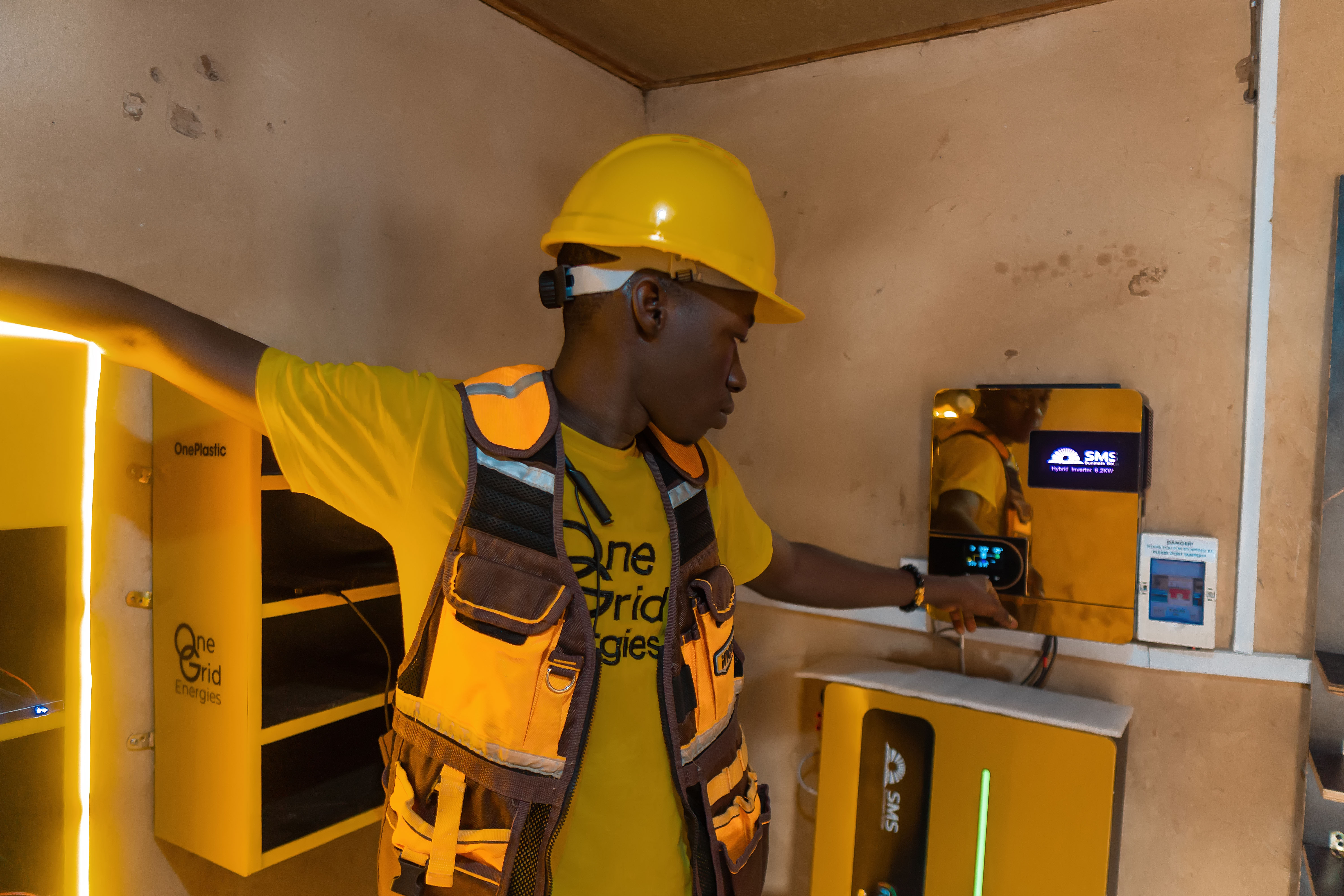
Explore OneBoxCustom solar installations for homes, schools, churches, healthcare centres and small businesses — clean, reliable power where the grid fails.
Get A QuotePractical renewable energy training — turning young Nigerians into solar technicians, entrepreneurs, and climate innovators.
Join The AcademyEvery lantern distributed, every job created, every tonne of CO₂ avoided is a life changed — and we're just getting started.
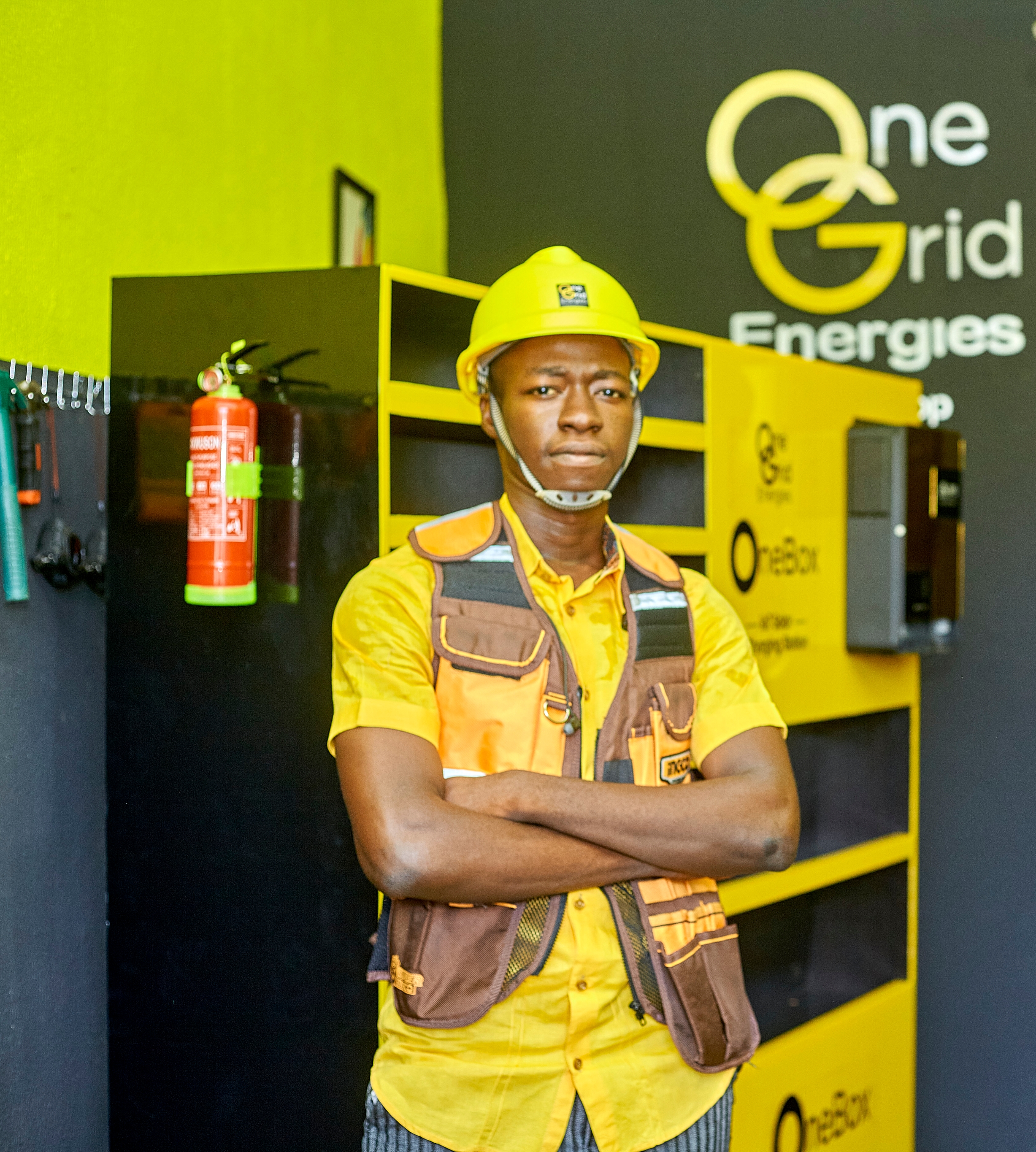
From workshop to community — a glimpse of OneGrid Energies at work across Nigeria.
Partners & Supporters
Whether you're looking to partner, fund, invest, or simply learn more — we'd love to hear from you.
From a single spark of conviction in Onitsha to 12,000 lives touched across Nigeria — this is the story of OneGrid Energies.
These principles guide every decision, every lantern, every life we touch.
OneGrid Energies isn't built on charity — it's built on circular economics. Every lantern sold funds the next one. Every charging station generates revenue that sustains the community that hosts it.
Our model proves that social impact and commercial viability are not in tension — they amplify each other. We're a social enterprise designed to outlast its funding rounds.
By diverting waste plastics and batteries from landfills, we address two environmental crises simultaneously: solid waste pollution and energy poverty. One problem, one solution, twice the impact.
Whether you're an investor, a donor, an NGO, or just someone who believes no child should study by candlelight — there is a place for you in this story.
Two waste streams. One innovation. Thousands of lives illuminated. The OnePlastic initiative is proof that the solution to energy poverty was hiding in plain sight — in our rubbish bins.
Over 90 million Nigerians lack access to reliable electricity. Meanwhile, millions of tonnes of plastic waste choke our communities, and discarded laptop batteries pile up in e-waste dumps — both causing immense environmental harm.
OnePlastic takes these two problems and turns them into a single elegant solution: affordable, durable solar lanterns built entirely from waste materials, distributed to families, schools, and healthcare centres that need them most.
Each lantern costs a fraction of what kerosene costs over a year, charges via a small solar panel, and lasts for thousands of hours. It replaces toxic flame with clean light — and transforms waste into wealth.
From street waste to clean light — five steps that change everything.
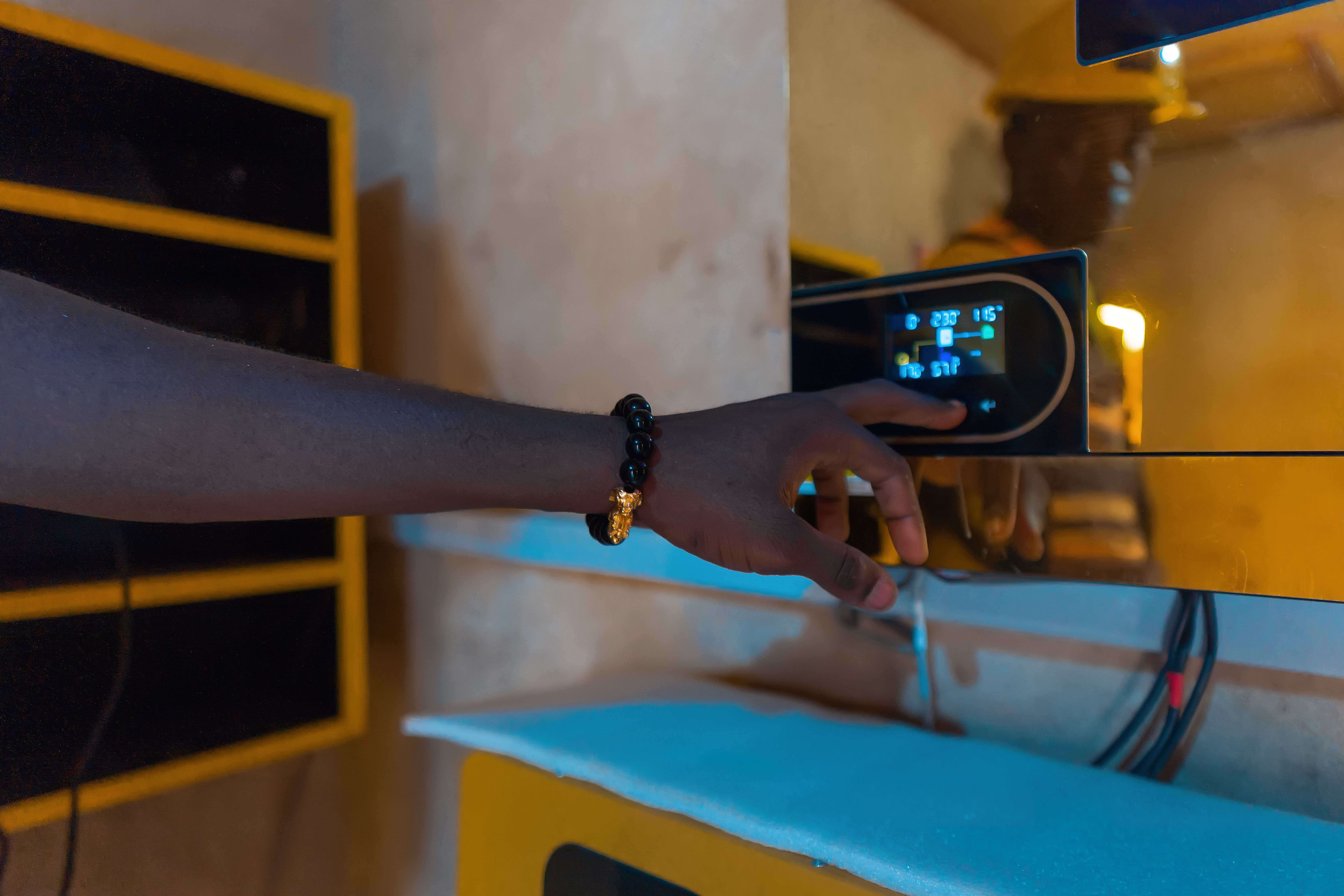
The OneBox charging station is a solar-powered hub placed at the heart of a community. Managed by a local entrepreneur — often a woman or young person — it serves as a rental point where households can hire a lantern for the night.
The station manager earns income. The community gets light. OneGrid gets operational revenue. Everyone wins. It's the circular economy in action, at the neighbourhood scale.
A self-sustaining circular economy model that grows with every lantern deployed.
The OnePlastic model has been validated. Now it's time to scale.
With 90M+ Nigerians without reliable power, the addressable market for OnePlastic is massive and largely untapped.
The same waste-to-energy model applies across sub-Saharan Africa — 600M+ people without electricity, abundant waste feedstock.
Next-generation lanterns with USB charging, phone charging ports, and IoT connectivity currently in development.
These are not statistics. These are people. These are the faces behind the numbers — and their stories remind us why none of this work can stop.
"Before this lantern, our evening service ended at sunset. Now we worship into the night, and our congregation has tripled."
Pastor Joel leads a congregation in a semi-rural community outside Onitsha where power outages last days at a time. Church services, prayer meetings, and community gatherings were all constrained by the sunset. Kerosene lamps filled the building with smoke and fire risk.
When OneGrid Energies arrived with OnePlastic solar lanterns, everything changed. The church now runs evening youth programmes, literacy classes, and community meetings — long after dark, safely and cleanly. Pastor Joel has since become an unofficial ambassador for OnePlastic in his community.
"I used to sell secondhand clothes to survive. Now I run an energy business. I am the power company in my street."
Ngozi Obi was a petty trader in the Nnewi market when she heard about OneGrid's OneBox programme. She applied, was selected, and received a community charging station loaded with ten solar lanterns to rent out nightly.
Within three months, she had paid back her initial investment and started saving. She's now hired two young people to help her manage the station in the evenings. Her income has more than doubled — and her neighbours no longer fear the dark.
"The children used to read by the flame of a candle. We were afraid every single night. Now they read until 10pm and their grades have improved."
When OneGrid Energies' outreach team visited St. Augustine's Primary School in a rural Anambra community, they found 340 pupils whose homework depended entirely on candles and kerosene — both fire hazards and toxic to young lungs.
The school outreach programme donated lanterns to 80 of the most vulnerable families and established a reading programme that runs three evenings per week by solar light. End-of-year exam results showed measurable improvement across all classes.
"I delivered three babies last month by the light of a solar lantern. All three mothers and babies survived. Before OneGrid, I am not sure we would say the same."
Nurse Adaeze Eze works at a primary healthcare centre in Uli, Anambra, where grid power is rarely reliable after 6pm. Night deliveries — the most dangerous kind — were performed by torchlight held by an assistant, or not at all.
OneGrid's OneHealth programme supplied the clinic with six solar lanterns and a larger solar installation for the delivery room. Nurse Adaeze no longer pauses at dusk. She works through the night, safely, and the community's maternal mortality rate has fallen significantly in the months since deployment.
Every investment, every partnership, every lantern funded writes a new chapter in someone's story of hope.
Partner With OneGridInvestors, partners, donors, governments, NGOs — we want to hear from all of you. No vision is too large.